Guides
Assessing Trichomes – How to Time Your Harvest

 Add MyCannabis.com to your preferred sources on Google

Trichome inspection can help track cannabis flower maturity, especially when observations are recorded consistently. It cannot measure THC content or guarantee the effects of the finished product. Use it alongside flower development, plant health and, where available, analytical testing.
Which Structures Are You Looking At?
Cannabis has both glandular and non-glandular trichomes. The glandular structures produce and store resin containing cannabinoids and terpenes; ordinary non-glandular hairs do not have the same function. Bulbous, capitate-sessile and capitate-stalked are commonly described glandular forms.
The conspicuous stalked glands on female flowers have a head supported above the surface. Do not confuse these heads with the longer stigmas emerging from the flowers, or assume every hair visible in a photograph is a resin gland. Gland size, density and development can vary with genotype and plant age.
How to Make an Inspection Useful
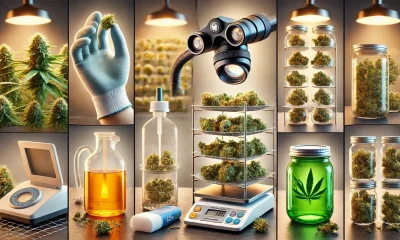
- Use stable magnification. A loupe or supported microscope should show intact gland heads clearly. Optical quality and focus matter more than the largest advertised magnification.
- Keep lighting consistent. Reflections, colored grow lights and camera settings can change how clear, cloudy or amber structures appear.
- Compare representative flowers. Check several locations and distinguish flower bracts from sugar leaves. One exposed leaf or top flower does not represent the entire plant.
- Record changes over time. Label photographs with the plant and sampling location. Avoid squeezing or repeatedly rubbing the inspected area.
What the Photographs Show
The following images illustrate increasingly conspicuous resin-bearing surfaces and harvested flower. They are useful for recognizing appearance, but are not paired laboratory measurements of cannabinoid content and should not be used as a potency chart.


Trichomes giving a ‘frosty’ or ‘furry’ appearance on harvested cannabis.
Interpreting Clear, Cloudy and Amber Heads
Growers often describe a progression from transparent heads to cloudy and then amber or brown appearances. These observations can help describe development within a familiar crop. A fixed rule such as harvesting at exactly 10% amber is not a universally validated optimum.
Research on glandular trichome maturation found differences associated with plant age and genotype, as well as changes caused by handling. A separate 2025 study identified pre-secretory, secretory and post-secretory developmental phases, with THCA continuing to accumulate in the post-secretory phase studied.
These findings do not make visual inspection useless. They mean that appearance is an indirect observation of a more complex biological process. Cloudiness does not prove peak THC, and amber color does not quantify conversion to CBN.
Likewise, harvesting cloudier heads cannot guarantee an energetic experience, and choosing more amber heads cannot guarantee sedation. Product chemistry, dose, route of use and the individual all influence effects. A laboratory analysis is needed to establish cannabinoid concentrations.
Combine Several Indicators
Consider the development of the flowers as a whole, the crop’s known history and any disease or environmental pressures. Breeder flowering estimates provide context, but conditions can shift development. Stigma color is another observation, not the same structure as trichome-head color.
A 2025 study of stigma color and harvest timing found that the commonly used amber-stage approximation was useful in many cases, while recommending genotype-specific assessment for the desired cannabinoid profile or concentration. The distinction matters: evidence about stigmas should not be presented as validation of an exact amber-trichome percentage.
Protect the Harvest After Inspection
Handle flowers gently and keep equipment clean. Broken or detached heads represent physical damage, not a desirable maturity stage. Plan drying and curing around the crop and environment, and do not try to compensate for contamination by waiting for a preferred color.
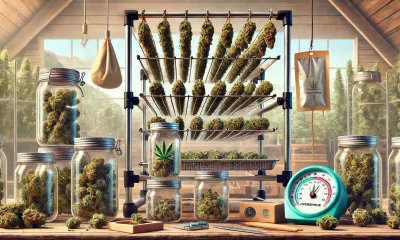
Our harvesting and storage tool guide covers magnifiers, racks and monitoring accessories. Their value is in making observations and handling more consistent, rather than promising a precise medical effect from a visual harvest rule.