Guides
10 Simple Products to Make Cannabutter Easier

 Add MyCannabis.com to your preferred sources on Google

Cannabutter can be used in sweet or savory recipes, but homemade infusion introduces two separate challenges: handling hot food safely and knowing how much THC a serving contains. Kitchen equipment can help with the first and make portions more consistent. It cannot establish the potency of an untested batch.
Edibles avoid inhaling smoke, yet their delayed effects can make overconsumption easier. They are not automatically a more controlled experience or an ideal treatment for pain, anxiety or insomnia. This guide explains which tools are useful, which are optional, and where common kitchen advice needs limits.
1. Pressure Cooker
A pressure cooker is optional equipment, not a requirement for making infused butter. Its usefulness depends on the model and an appropriate, manufacturer-supported cooking method. Pressure cooking does not guarantee optimal extraction, prevent all scorching or measure cannabinoid concentration.

Rendering of a pressure cooker and a butter-based infusion.
Follow the appliance’s liquid requirements, accessory restrictions and pressure-release instructions. Do not improvise a tightly sealed jar setup or treat melted butter as the liquid needed to generate steam. Instant Pot’s safety instructions prohibit deep frying or pressure frying with oil. A product illustration is not a tested recipe.
2. Ghee
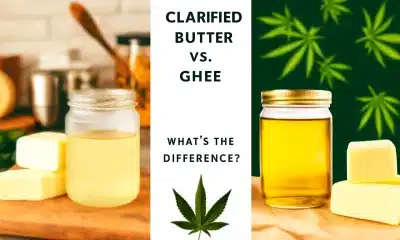
Ghee has most of its water and milk solids removed and offers a different flavor and cooking behavior from ordinary butter. Choose it because it suits your recipe, rather than assuming it will necessarily produce stronger cannabutter. Starting cannabis potency, processing losses and the final quantity all affect concentration.

Rendering of a baker clarifying butter by removing milk solids.
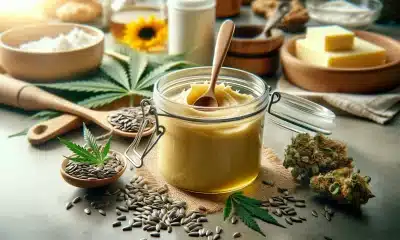
The storage instructions for unopened commercial ghee do not establish the shelf life of a homemade infusion containing added plant material or water. Refrigerate or freeze the finished product in a suitable food container, label it clearly as containing cannabis and keep it locked away from children and pets. Do not assume a sealed jar makes it shelf-stable.
3. Mason Jars
Clean food-storage jars can help organize ingredients and hold finished butter. For freezing, choose a jar designed for that purpose and follow its headspace and temperature-change instructions. Inspect glass for chips and cracks before use.

Rendering of stacked mason jars for use in baking.
Do not assume a canning jar is oven-safe bakeware. Ball says its canning jars are not tempered for oven use. Likewise, home-canning suitability does not approve every infusion method or an airtight container heated under pressure. Use containers only as their manufacturer directs, and avoid sudden changes between hot and cold temperatures.
4. Heated Magnetic Stirrer
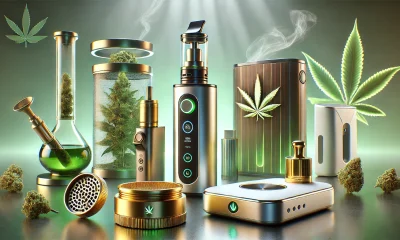
A magnetic stirrer can mix a compatible liquid using a rotating stir bar, but it is specialist equipment rather than an essential kitchen purchase. A food-safe spatula and suitable cookware may be sufficient. Confirm that every surface contacting the food is appropriate for food use and the intended temperature; laboratory availability alone does not establish this.

Topline Magnetic Stirrer SH-2
The pictured Topline SH-2 is an example of the equipment category, not confirmation that the model is approved for this food application. Check current manufacturer documentation before buying through Amazon (AMZN ) or another retailer. Never repurpose equipment previously used with laboratory chemicals for food.
Stirring helps combine ingredients, but neither a stirrer nor added lecithin guarantees uniform THC distribution or better absorption in a person. Lecithin can affect texture and emulsification; it is not a substitute for measuring the finished product’s cannabinoid content.
5. Kitchen Scale
A scale helps record ingredient weights and divide the finished batch by mass. Choose adequate capacity and resolution for the quantities involved, use the tare function to subtract the container, and check accuracy according to the manufacturer’s directions. A scale that displays whole grams is not a milligram instrument.

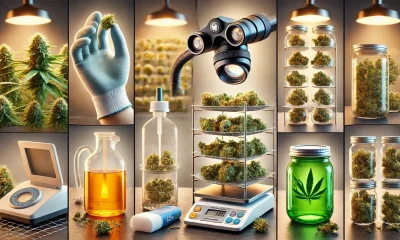
Rendering of a kitchen scale used to weigh cannabis in a mason jar.
Grams of cannabis are not milligrams of THC. Even with a starting laboratory result, a home calculation must make assumptions about conversion, extraction, losses and mixing. Weighing ingredients can support an estimate; it cannot guarantee the actual THC dose in each serving. Laboratory analysis of the finished preparation is needed to establish its measured concentration.
6. Cheesecloth
Food-grade cheesecloth or a suitable fine strainer can remove larger plant particles. Secure it over a stable, food-safe receiving container and leave room for the liquid. Straining improves texture but does not remove every contaminant or make the butter sterile.

Rendering of cheesecloth being used to filter a cannabutter of plant matter.
Let the preparation cool to a safe handling temperature before squeezing or manipulating the cloth. Hot fat can cause serious burns, and squeezing can splash liquid or force fine particles through the fabric. Recovering the last spoonful is not worth handling a hot bundle directly.
7. Food-Handling Gloves and Heat Protection
Disposable gloves suitable for food contact can reduce sticky residue on your hands. They do not replace handwashing, and contaminated gloves should be changed. Check the packaging rather than assuming every medical glove is intended for food preparation.

Rendering of medical gloves being used to squeeze cannabutter from cheesecloth.
The illustration shows disposable gloves, which are not heat protection. Use appropriate dry oven mitts or heat-resistant kitchen gloves for hot containers, and let food cool before handling a straining cloth. Thin disposable gloves should never be relied on to protect against hot butter or steam.
8. Beaker Set or Pouring Jug
A food-safe pouring jug with a spout can make transferring butter less messy. A beaker may serve a similar purpose if it is intended for food contact and the temperature involved. Ordinary beaker graduations are approximate; a laboratory shape does not make them more accurate than every kitchen measuring cup.

Rendering of a beaker being used to measure cannabutter before pouring.
Use a stable work surface and a container that is easy to grip. Measuring volume helps divide a batch, but equal liquid volumes do not establish an equal THC dose unless concentration and mixing are known. Keep food equipment separate from anything used for nonfood chemicals.
9. Grinder
A clean grinder can break plant material into more consistent pieces. Avoid turning it into fine powder simply to make the batch stronger: smaller particles can be harder to strain and may change the texture and flavor of the finished butter.

Rendering of a grinder being used for cannabis.
Grinding is a preparation step, not proof that decarboxylation or extraction is complete. Clean the tool according to its material and manufacturer’s directions, remove residues from cleaning products, and allow it to dry before contact with food ingredients.
10. Silicone Butter Molds
Food-grade silicone molds can make chilled portions easier to remove and organize. Choose a product rated for the temperatures you will use, wash it as directed and check the size of each cavity against your recipe needs.

Rendering of filtered cannabutter being poured into a silicone mold.
Equal-looking blocks are convenient portions, not verified doses. Store them in clearly labeled, secured packaging rather than leaving them where they could be mistaken for ordinary butter or sweets. Record the recipe and any estimated potency, identifying the number as an estimate.
Plan for Delayed Effects
Health Canada describes oral effects as beginning in roughly 30 minutes to two hours, with the strongest effects potentially taking two to four hours. Timing varies, and effects can last much longer than expected. Do not keep eating more because the first portion has not taken effect.
Where legal, a regulated product with a stated THC amount is easier to assess than untested homemade butter. Do not drive after consuming intoxicating cannabis. If a child consumes an infused food, or someone has severe symptoms such as difficulty breathing or loss of consciousness, seek urgent medical help.