Guides
Mold in Cannabis: Prevention, Identification, and Safe Handling

 Add MyCannabis.com to your preferred sources on Google

Mold can damage cannabis before harvest and during storage. Prevention depends on moisture management, sanitation, and early diagnosis. Once harvested flower appears moldy, the priority is avoiding exposure, not finding a home treatment that makes it usable.
Recognizing a Possible Problem
Several plant diseases can affect cannabis, and they do not all look or behave alike. NC State Extension describes gray mold caused by Botrytis as producing brown, water-soaked lesions and gray fungal growth on affected tissue. Other pathogens can cause similar damage, so a photograph or casual inspection may not identify the organism.
The University of Florida’s hemp disease guide describes powdery mildew as another distinct problem. Unlike many leaf diseases, it does not require leaf wetness for infection, although high humidity favors it. Keeping leaves visibly dry therefore does not eliminate every fungal risk.
Unexpected fuzzy growth, powdery patches, or decaying tissue warrants investigation. Appearance alone cannot certify that flower is free of contamination. For a living crop, contact a plant diagnostic service and ask how to submit a sample legally and safely. A diagnosis helps distinguish disease from other causes of discoloration or damage.
Reducing Risk in a Living Crop
NC State’s gray-mold guidance emphasizes clean equipment, removal of dead or infected material, adequate spacing, and control of excess moisture. It advises avoiding removal of affected tissue while conditions are wet or humid, when spread is more likely. Manage airflow through the canopy and address leaks or persistent condensation.
There is no single room temperature that guarantees protection. Botrytis can thrive in moist conditions at roughly 65–75°F, overlapping temperatures commonly used for cultivation. Monitor conditions within dense plant growth as well as the wider room. A fan does not remove water from the air; ventilation and dehumidification may also be needed.
Do not assume that shaking an infected plant or directing a strong fan at it is a useful drying treatment. Handle affected material carefully to limit dispersal. Measures that reduce spread to other plants do not restore infected flower to a verified safe condition.
Be Careful With Fungicide and Biological-Control Claims
“Organic” does not mean a product is appropriate for cannabis or safe to apply to material intended for inhalation. Do not improvise with neem oil, household sprays, or beneficial fungi as a treatment for contaminated buds. The product, crop, disease, application timing, and local rules all matter.
The EPA’s pesticide information resources provide access to product labels and registration information. Consult current local agricultural guidance and the actual label before applying any crop treatment. A product suitable for one plant or use is not automatically suitable for another.
Companion planting is not a substitute for disease diagnosis or sanitation. Nearby herbs should not be presented as a proven way to make mold-contaminated cannabis safe.
Harvested Flower: Storage and Disposal
Keep suspect flower separate from other material and do not smoke, vape, eat, or share it. Do not assume that trimming off visible growth, washing, cooking, or making an extract provides a validated home decontamination method. For a purchased product, retain the package and lot information and contact the retailer or relevant regulator about return or disposal.
Check official recall notices. For example, Maine’s October 11, 2024 Nova Farms recall covered specified pre-ground flower, pre-rolls, and blunts sold at 14 stores. Testing found microbial and yeast-and-mold results above the applicable thresholds. This is a dated example, not a claim about all products from the company today.
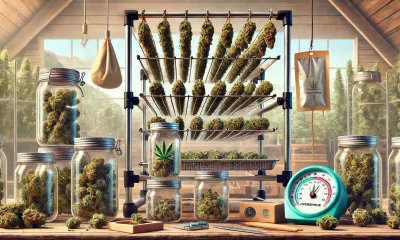
For uncontaminated dried flower, follow labeled storage directions and use clean, appropriate containers. ASTM D8197-22 specifies a water-activity range of 0.55–0.65 for dry cannabis flower. Water activity is a property of the material, not simply the room’s relative humidity. Achieving a target does not prove a contaminated batch has become safe.
Health Canada’s storage guidance also emphasizes preventing access by children and pets. Storage quality and secure storage are both important.
Understanding the Health Risk
CDC explains that Aspergillus can cause disease after its spores are inhaled, particularly in people with weakened immune systems or lung disease. Most people exposed to this common environmental mold do not become ill. Risks depend on the organism, exposure, and person; not every cannabis plant disease has the same health implications.
A 2020 analysis of insurance records found an association between recorded cannabis use and fungal infections. Its observational design could not establish that cannabis caused those infections. It nevertheless supports particular caution for immunocompromised people.
If you feel unwell after using suspect cannabis, stop using it and contact a health professional, mentioning the possible exposure. Seek urgent care for serious breathing difficulty. Preventing further crop damage and protecting the person who might consume the flower are separate responsibilities; neither should depend on an unverified home remedy.