Cannabis Research
Cannabis and Airborne DNA: New Tools for Cultivation

 Add MyCannabis.com to your preferred sources on Google

Imagine monitoring an entire ecosystem – pests, pathogens, even nearby cannabis plants – by sampling nothing more than the air. Thanks to recent research published1 in Nature Ecology & Evolution, this vision is becoming a scientific reality.
In the study, researchers demonstrated that airborne environmental DNA (eDNA) can be collected and analyzed to reveal the presence, genetic variation, and health of organisms across all domains of life. Using shotgun sequencing and cloud-based bioinformatics, they achieved a 2-day turnaround from air sampling to a full genomic report. For the cannabis industry, where compliance, crop monitoring, and ecological impact matter, this opens doors to powerful and exciting new applications.
What Is Airborne eDNA and Why Is It Important?
Environmental DNA refers to trace genetic material shed by organisms into their surroundings. While eDNA has been collected from water and soil for years, this study proves that air alone can be a rich source of genetic data – even from mobile species like bobcats, spiders, and yes, cannabis plants.
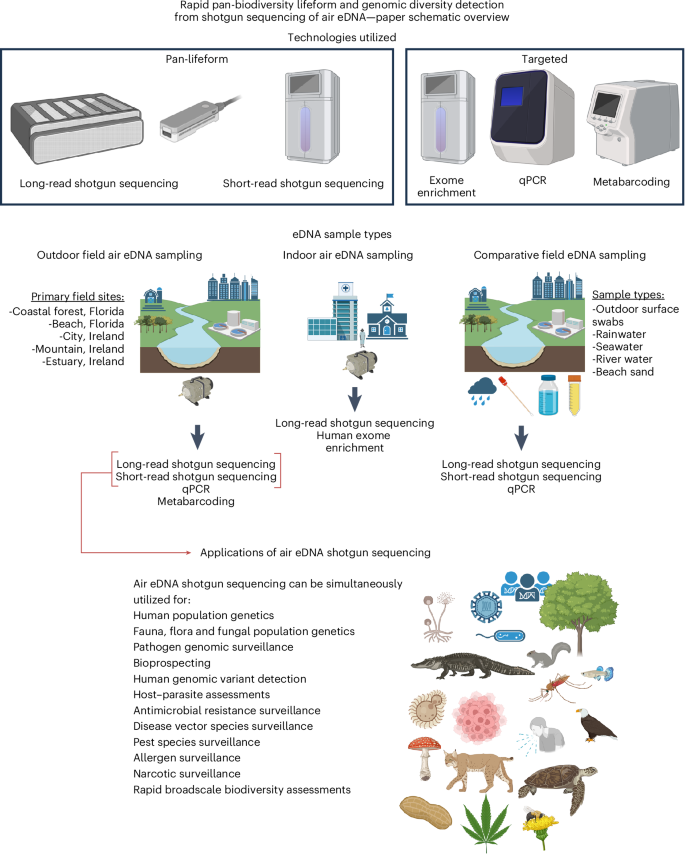
By using both long-read and short-read sequencing technologies, researchers captured detailed biodiversity data from air collected in urban and rural environments. This included human haplotypes, spider phylogenies, and a staggering array of microbial, fungal, and plant DNA, including Cannabis and Psilocybe species, both detected in Irish city air despite strict regulations.
Applications for the Cannabis Industry
So now that we know cannabis eDNA can easily be detected within our surroundings through monitoring air supplies, how can this information be put to use by the sector as a whole?
1. Crop Monitoring and Contamination Detection
Airborne eDNA could offer a noninvasive way to monitor cannabis crops, detecting not only the presence of cannabis genetics but also nearby mold spores, invasive plant species, or pests like mites and aphids. For outdoor growers, especially those in mixed-use agricultural zones, this offers a passive surveillance tool for identifying threats before they cause visible damage.
2. Regulatory Compliance and Forensics
The same study revealed that human genomic material and narcotics-linked DNA (including Papaver somniferum, the opium poppy) could be detected from air samples. In regulated cannabis markets, where legal grows must remain clearly separated from illicit activity, airborne eDNA could support compliance enforcement or exoneration.
For example, if unauthorized cannabis DNA is detected drifting into a legal grow, operators could use such data as evidence of contamination rather than culpability.
3. Biodiversity and Ecosystem Impact Assessments
Cannabis cultivation, especially at an industrial scale, can alter local biodiversity. With air eDNA, cultivators can assess the impact of their operations on pollinators like bees, beneficial microbes, and pest populations. This would be particularly helpful for organic growers or those applying for sustainability certifications.
4. Early Pathogen and AMR Detection
The UF study successfully identified genes related to antimicrobial resistance (AMR) and plant pathogens such as Alternaria alternata, which causes cannabis leaf spot. Real-time eDNA monitoring could allow growers to detect pathogens and resistance markers before symptoms manifest, reducing the need for broad-spectrum chemical treatments and supporting integrated pest management (IPM) strategies.
5. Cannabis Research and Bioprospecting
The study also highlights the potential for bioprospecting – the discovery of novel genes or bioactive compounds from environmental samples. Airborne eDNA could help researchers explore wild or heirloom cannabis cultivars growing in remote or inaccessible areas, revealing previously undocumented cannabinoid or terpene profiles that could have medical or commercial value.
Ethical and Legal Considerations
While the technology holds great promise, it is not without ethical baggage. The same tools that identify cannabis or its pests could also recover human DNA from the air, raising questions about privacy, consent, and surveillance. The researchers noted that airborne DNA collection from public spaces currently operates in a legal grey area that will need regulation as capabilities advance.
Final Thoughts: eDNA and Its Potential for Fresh Insights
Airborne eDNA analysis has the potential to represent a significant leap forward in how we monitor and understand ecosystems, including those shaped by cannabis cultivation. Whether used to validate sustainable practices, detect illegal operations, or prevent crop failures, this technology offers unmatched scope and speed. The cannabis industry, often at the forefront of integrating science into agriculture, is well-positioned to benefit from these advancements, provided the ethical and regulatory frameworks keep pace.
As the air around us becomes readable, cannabis operators may soon gain the power to see the unseen, allowing for them to act on it in real time.
Studies Referenced:
1. Nousias, O., McCauley, M., Stammnitz, M.R. et al. Shotgun sequencing of airborne eDNA achieves rapid assessment of whole biomes, population genetics and genomic variation. Nat Ecol Evol 9, 1043–1060 (2025). https://doi.org/10.1038/s41559-025-02711-w