Interviews
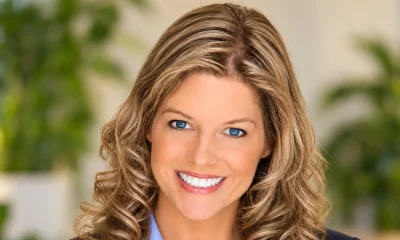
David “Mile High Dave” Crawford, Founder of Galactic Gardens – Interview Series

 Add MyCannabis.com to your preferred sources on Google

Key PointsCrawford's pheno-hunting is an endless quest for unique flavor validated by peers and…
View more
- Crawford's pheno-hunting is an endless quest for unique flavor validated by peers and clients.
- Minnesota's wholesale price point of $4,000 to $6,000 a pound drew Crawford from Colorado.
- Crawford says the best consultants assess each grow individually because no uniform process exists.
While some may assume that growing and harvesting cannabis is just like cultivating any other crop, that is far from the reality of how fickle and unique each cycle can be. The challenges cultivators face vary greatly depending on the size of the garden, the total number of crops, and the specific cultivation and agricultural technologies used. At the same time, the exact phenotypes and genetics of each strain are often of equal importance and heavily dictate how the final harvested product turns out. Just like with any other field of prosperous agriculture, there are many factors to consider and perfect in cannabis cultivation.
For a closer look at how the challenges differ between small- and large-scale cultivations—and how phenotype hunting can improve overall harvest results—mycannabis.com spoke with David “Mile High Dave” Crawford, founder of Galactic Gardens.
What were your first experiences with cannabis like? How did you first get into cannabis cultivation, and what did you most enjoy about it?
I first got into cultivation when I was living in Santa Cruz, California. I was about 19 years old, and I had got fired from one of my first jobs, at a computer circuit board company. And I was looking for a way to get by. And my roommate at the time was involved in cultivation and offered to show me the ropes. We went on a trip up into the hills, and we started growing from there. And that was really my entry into it as a business, and my first experience growing cannabis at a larger scale beyond having a single plant in my backyard.
And once I really got into cultivating, I loved being able to create something that I could consume and enjoy. Especially because of the economics of it all; back then it was so expensive. So to be able to grow it, and smoke it, and have some super high quality, well that was just like the best thing ever. You didn’t have to deal with some shady dude, or shady product, where you didn’t even know where your medicine was coming from. Being able to grow your own, you knew it was coming from your hands. You knew everything that went into it, and that to me is still, to this day, the best thing ever.
How did you see cannabis provide assistance and relief to the lives of yourself and your loved ones?
I grew up in the days of Prop 215. When I lived in Santa Cruz, my neighbor had HIV, and I remember going to San Francisco with him, where we went to Dennis Peron‘s house to buy a couple of pounds. I used to get a lot of high quality flower through those kind of relationships, and that allowed me to interact with super-premium cannabis flower for the first time. And I saw the impact it had on my neighbor and how it helped him. I had another neighbor who had epilepsy, and had TBI from a horrific car accident. We all smoked cannabis together and hung out, and they were really good guys. And I saw how cannabis helped them. And this is like 30 years ago. It made me want to grow the plant to help people like them in a medical capacity,
I’ve seen it with my own wife, who was not much of a cannabis user at all, when she had a medical emergency. She was prescribed fentanyl for pain, and it wasn’t helping her. And I gave her some cannabis – like the smallest hit – and she finally got relief that even the strongest prescription medication couldn’t give her, and she was able to sleep. I remember that distinctly, and she even talks about it to this day. How that was the only thing that gave her a few hours of rest during one of the most painful time experiences she’s ever had.
What inspired you to move out to Colorado? What opportunities in the Colorado cannabis industry did you envision that you didn’t think were possible in the California industry?
My mom was living in Colorado. I just came to visit her, and I loved it so much in Colorado that I had all of my stuff shipped over and never left! I actually had a friend of mine go to my apartment, pack all my stuff up, and pay my last month’s rent and shipped everything that I owned to Colorado. It was only three boxes; I didn’t have much. After only about a year living in Colorado, they legalized adult use cannabis. I was like, “Holy shit! Like this is amazing! Like, you mean I can go into a store and just buy weed?” It was kind of like Wild Wild West back then. Like, people were selling weed on Craigslist: you could go on Craigslist and buy ounces from all kinds of different buyers. This was before dispensaries were open, but right when the law had passed. I had always grown on a small scale, but it wasn’t until COVID hit that things really changed in my cultivation.
At the time I had been selling comic books online for a living. I sold graded comic books. I used to buy wholesale comic books for 10 cents apiece, and I’d find all kinds of gems in there and get them graded. And I made a decent living, a little over 100 grand a year. And then COVID hit, and man, and that business just tanked – nobody wanted to touch anything that someone else had touched. So selling used items just wasn’t a thing anymore. So when that crashed, I looked at my wife and said, “Look, I want to grow at a larger scale. I see a future in it and I know that this can get us through these tough times.” And she told me, “Well, I’ll support it if you get some kind of license.” So I decided to get a medical card, and I kind of just started from there. I got a larger plant count, and it just kind of just took off from there. I went from that, to growing to larger and larger and larger spaces to where I am today.
I realized that I had a talent for it. You always have that self doubt; like you think you’re good at something, but it’s not validated. It wasn’t really until other people were telling me how good I was at it that I thought that I could really do this as a living. And I had good timing on my side: the laws were changing and evolving, making it easier for someone like me to step fully into the legal space.
From your experience, why is phenotype hunting such a crucial process for cannabis cultivators? How does that process ensure that each different strain has the most desirable traits and richest terpene profiles?
For me, pheno-hunting is a never-ending quest. It’s an endless quest for flavor. And it doesn’t stop just because I found something amazing today; you know, I’m going to keep looking tomorrow. It’s the endless treasure hunt, and it’s always rewarding and fulfilling when you find that hidden gem. For me, it’s the best thing ever, and gives me the most rewarding feeling when I can find something ultra unique. And when I think it’s unique, you know that’s cool, but when I take it out into spaces and people are like, “Holy shit, what is this?” or “Wow, man, where’d you find this?” or “How do you do that?” That’s when I really know I’ve found something special. You know, it’s that affirmation that I’m looking for, that I really know how to find things special. I’m always going to be looking for new flavors. I’m always looking for that affirmation from my peers and from clients that are, that “wow factor”. I want people to say “Holy cow like this is the most amazing flower ever,” so I’m always searching for things that are going to get that reaction, and that for me is the most rewarding thing. The confirmation that my ability to select flavors is second to none.
What are some strains you’ve grown that you’re particularly proud of or were very successful in the dispensaries? Why do you think those strains stood out and were so popular in particular?
I wouldn’t limit it to dispensary sales, but I would say first and foremost Dante’s Inferno. That’s the strain that I’m most known for. That’s a cultivar that I brought out all over the country and all over the world. I’ve sent that strain to probably 20 different countries, from South Africa to Argentina to Israel to Germany to Switzerland to the UK to Brazil. Also that cultivar is two different phenos, so one that I’ve spread around the world is the Dante’s Inferno #8. The second pheno is the Dante’s Inferno #6, which I haven’t spread around the world, but that’s the one I’ve won the most competitions with, both nationally and internationally. That’s the one that won me Spannabis. That’s the one that won me, you know, the CoNNect Community Candy Battle Royales in Vegas. It also won me Most Unique at the Farmers Cup in San Diego, as well as the Colorado Connoisseur Cup. It’s won me the most amount of accolades, and the reason is because the flavor profile is so unique to cannabis. I think that you know most people have never seen a flavor profile like that in a plant, and so that’s what was my motivation to bring it, you know, to competitions, and boy, did she really prove to be that!
What awards and recognition have your strains and cultivation expertise received over the years? Why are those accolades so meaningful?
You know, you can look at yourself in the mirror and say I’m the best, I’m the greatest, or you can look at your work and say this is the best, this is the greatest. Its important to have that confidence and pride in yourself, but when other people that you respect affirm that, that’s something different, To go to multiple states, and different countries, and still come out on top out of dozens upon dozens or hundreds of entries, that says something special. That’s the proof that yes, you are better than the rest. When you can go out and win, that’s the proof. So for me, that’s what awards are about. That’s what they mean to me. That it’s the affirmation again, the confirmation from my peers, from the clientele that what I have is second to none.
Through your consulting work with Galactic Gardens LLC, what are the most frequent issues your clients in their cannabis gardens that prevent their buds from reaching their best potential? How do the overarching issues change depending on the size of the gardens themselves?
There’s always a variety of issues depending on the size of the grow location. There’s dozens upon dozens of mitigating factors on cannabis quality and end-product result. So when I bring on a new client, my first thing to do is assess their environment, assess their needs. We go through everything, from what’s in your water, how do you feed, how does your runoff look, PPFD (pest control), and so on. There’s a myriad of things that you have to go through that equal that final product. And every single client has different issues, different needs, different concerns, different things that need to be addressed. There’s no one uniform process. I would say the most consistent thing is there’s no one uniform thing ever. The number one skill for any good consultant is the ability to assess grows individually. You have to know what you’re looking at, how to identify any problems and how to find the solution. There are all kinds of problems that can arise in a grow, from pests to environmental factors, and knowing how to assess and make the correct adjustments really is the difference between success and failure.
What inspired your move out to Minnesota? How did you hope to apply your vast cultivation and pheno-hunting expertise to such a new cannabis market?
I would say the main reason is the price point here. Wholesale cannabis price point in Minnesota is between $4,000 and $6,000 a pound. Whereas in Colorado, it is around $600 to $800 a pound. Somewhere between $600 and $1,000 a pound is basically the going rate in almost every other market in America. So Minnesota, being this new emerging market with this beautiful price point, I saw an opportunity where I can thrive as a business. Most of the time in emerging markets, those premium price points last for two to three years, and I was offered a partnership with friends who have been setting up, laying the foundation and the groundwork here in Minnesota for years already. They have all the licensing, and I hate to sound cliche, but they just made me an offer I couldn’t refuse. With that being said, I packed my family up and I moved here. And my desire is to bring to market the highest quality flower that Minnesota has ever seen. Knowing the quality of flower that is in the market today here in Minnesota, and knowing and understanding the quality of flower that I produce, and the variety of phenotypes that I bring to the table, Minnesota is about to be pleasantly surprised with the level of cannabis that’s going to be hitting the shelves through my partnership with the Community Gardens.
Compared to other markets you’ve worked in, what opportunities and potential do you think the Minnesota industry has as one of the youngest cannabis markets?
The Minnesota cannabis marketplace is projected to grow to $1.5 billion over the next three years. With that being said, I think there is a world of opportunity in almost every single aspect of this industry to not only make revenue but provide an experience, quality product and service to the people of Minnesota. I have a real deep knowledge base in terms of cultivation spaces and how to bring quality cannabis to the marketplace. So I know exactly what to do to give Minnesotans a product that they really haven’t seen before here.
What do you hope that Community Gardens stands for and represents in the Minnesota cannabis industry? What are some top shelf strains that Minnesota consumers should expect?
My goal for Community Gardens is to stand for excellence, quality, second to none here in the Minnesota cannabis industry. That’s what we plan to bring. Community Gardens will be my launching point for multiple projects here in Minnesota, and all of them will be centered on the highest quality service and product possible for the people to consume and enjoy. That’s what Mile High Dave stands for and that’s what we want to bring in terms of flavors. I have an extensive library of genetics, including my champion award-winning strains like Dante’s Inferno #6, which should be coming out of tissue culture soon here. Also the 5280 pheno, another strain that I created: Dante’s Inferno cross with RS 11. That has won me some competitions as well. I’m just trying to bring as many good flavors that I have in the library now; there’s so many it’s hard for me to nail them down. But Dante’s Inferno, 5280, Watermelon Hurricane, Pablo’s Driver will be the first of other genetics that, honestly, Minnesota has never seen before. These will all be brand new, and not only that, but I have a ton of seed that I’ve created with brand new genetics that I will be bringing into the market as well.
Thank you for joining us, David! For more information on his work, please visit his website.