Technology
3D Printing in the Cannabis Industry: A Disruptive Force in a Growing Market

 Add MyCannabis.com to your preferred sources on Google

Additive manufacturing, also known as 3D printing, is revolutionizing industries worldwide. This technology builds objects layer by layer from digital blueprints and offers unparalleled control over design and material usage. Unlike traditional subtractive manufacturing, which carves material away, additive manufacturing adds material precisely where needed. This approach opens a world of possibilities for complex and intricate designs that were previously impossible.
Under the 3D printing banner, various approaches can be taken, including but not limited to:
- Fused Deposition Modeling (FDM): A widely used form of 3D printing where thermoplastic filaments are melted and extruded layer by layer.
- Multi-Material Printing: The ability to use different materials in a single build, ideal for creating products with varied properties.
- Laser Powder Bed Fusion: A method using lasers to fuse powdered metals or polymers, offering high precision for complex parts.
The cannabis industry is just one example of a field benefitting from an influx of technologies like 3D printing. This already extends to the following and beyond: cultivation practices, processing, and even consumption habits.
3D Printing in the Cannabis Industry
The cannabis industry, bolstered by increasing legalization and technological interest, is already leveraging 3D printing to enhance efficiency, sustainability, and innovation. Whether this be hemp-based filaments from 3D-Fuel or something else entirely, adoption is already occurring.
Customized Cultivation Tools and Equipment
Growers use 3D printing to create customized tools to optimize efficiency and yield. Imagine irrigation nozzles precisely tailored to specific plant strains and grow setups, ensuring optimal water and nutrient delivery while minimizing waste.
Similarly, lightweight, ergonomic pruning tools designed for comfort and precision are 3D printed to reduce fatigue and improve harvesting efficiency. However, the practice of manually harvesting cannabis may soon be obsolete with the advancements being made in AI and robotics.
Prototyping for New Products
The ability to quickly design, print, and test new products is invaluable in a rapidly evolving market. Companies leverage 3D printing to develop and refine prototypes for vape pens, accessories, and components for hydroponic and aeroponic systems.
This rapid prototyping process accelerates product development cycles, allowing for faster iterations to be developed based on feedback and a quicker time to market.
Eco-Friendly Packaging
Sustainability is a growing concern, and the cannabis industry is responding. 3D printing offers the potential to create unique, environmentally conscious packaging using hemp-based filaments or other biodegradable materials. Dispensaries and brands also use the technology to craft unique, eye-catching packaging designs for limited-edition releases or special promotions, enhancing brand identity.
Educational Models
3D-printed models of cannabis flowers, leaves, and other plant structures are proving to be valuable tools for researchers and educators. These detailed models provide a tangible way to understand the plant’s complex anatomy and physiology, enhancing learning and research efforts.
Future Applications
Notably, each of the aforementioned use cases is just the tip of the iceberg for what 3D printing may one day offer the cannabis industry. As the technology continues to mature, we may soon see the following implementations.
Personalized Devices and Accessories
Personalization is an area where 3D printing truly shines. In time, consumers will be able to design their own vaporizers or pipes, customizing features like airflow, modular components, and aesthetics to create their perfect product.
User-friendly design software and a range of materials, including heat-resistant polymers and metals, could allow consumers to customize products in the same vein as computer builds or personalized shoe designs – each being approaches that have changed their respective industries.
Tailored dosage solutions are also on the horizon. 3D-printed microdosing devices could offer precise control over cannabinoid intake, catering to medical patients or consumers seeking specific effects. These devices could feature intricate internal geometries to regulate the release of cannabinoids, ensuring accurate and consistent dosing.
On-Demand Production in Dispensaries
Dispensaries may one day offer the ability to create personalized and on-demand accessories like custom grinders, storage containers, or even unique smoking devices with on-site 3D printers. This approach could significantly reduce inventory costs by minimizing the need for large stockpiles of pre-made products, which may or may not have a market.
While this requires investment in equipment and training, it has the potential to offer a unique customer experience and a competitive edge. Dispensaries could offer a selection of pre-designed templates or allow customers to upload their own designs. The feasibility of this, however, will depend on printer speed, material costs, and product complexity. While intriguing, this use case will only arise once the technology has fully matured.
Advanced Cultivation Systems
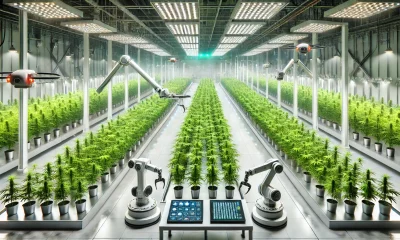
The future of cultivation may involve highly customized, modular growth units designed and built using 3D printing. These systems could incorporate integrated sensors and robotics for automated monitoring and adjustment of environmental factors, optimizing resource utilization and potentially leading to higher yields.
In this scenario, a grower could use a 3D-printed system with integrated sensors that monitor and automatically adjust humidity, temperature, and nutrient levels. Furthermore, developing self-healing components through multi-material printing could enhance the durability of these systems. For instance, a hydroponic system could have parts printed from materials capable of sealing minor cracks automatically, reducing downtime.
Bioprinting Cannabinoid-Rich Tissue
While still in the realm of speculation, advancements in bioprinting raise the intriguing possibility of lab-grown, cannabinoid-producing plant tissues. This could revolutionize extraction methods, providing a more sustainable and efficient way to produce cannabinoids for various applications. While this technology is in its infancy, ongoing research, such as the work being done to create lab-grown organs, suggests its potential. This would, of course, need to be carefully considered from an ethical perspective.
Navigating the Challenges
While 3D printing holds immense potential within the cannabis industry, the fact remains that many hurdles remain. Before this potential can be realized, the following must be addressed.
- Cost: Industrial-grade 3D printers and associated equipment currently require a significant upfront investment, potentially limiting adoption by smaller businesses.
- Scalability: Scaling up production using 3D printing for high-volume applications can be challenging and may not always be cost-effective compared to traditional methods.
- Materials: The range of materials suitable for 3D printing that also meet the safety and regulatory requirements of the cannabis industry is currently limited.
- Regulations: 3D-printed products will likely face regulatory scrutiny regarding safety, quality control, and product consistency. Clear guidelines are needed to ensure consumer safety.
- Learning Curve: 3D printing is rapidly advancing and currently requires specialized training to implement.
A New Era for Consumers
The impact of 3D printing on the consumer experience could be profound. While customized products might initially be more expensive, on-demand manufacturing and reduced waste could potentially lead to lower prices in the long run.
3D printing could also make cannabis products more accessible, particularly in areas with limited retail options.
The ability to customize devices and accessories will undoubtedly enhance product variety and cater to individual preferences. Of course, with any new technology, educating consumers about the benefits, safety, and proper use of 3D-printed cannabis products will be crucial.
Is Legalization a Catalyst for Innovation?
The ongoing wave of cannabis legalization worldwide is a crucial driver of technological adoption in its respective industries. Legal markets attract investment, foster competition, and create a sandbox for innovation. As more regions legalize cannabis, the influx of interest and capital will accelerate the adoption of technologies like 3D printing, Artificial Intelligence, blockchain, and biotechnology.
Interestingly, these technologies do not operate in isolation. They are beginning to interact and enhance one another – often referred to as ‘converging technologies.’
AI-Driven Design and Manufacturing: AI algorithms can analyze vast datasets, including consumer preferences, plant genetics, and growing conditions. This data can be used to generate optimized designs for 3D-printed products like vaporizers, hydroponic components, or even packaging. AI could suggest the most efficient airflow design for a vaporizer based on user feedback or optimize the structure of a hydroponic system for maximum nutrient delivery. These AI-generated designs could then be directly fed into 3D printers for automated production, streamlining the entire process from concept to creation.
Blockchain-Enhanced Traceability and Compliance: Blockchain’s immutable ledger can be used to track the entire lifecycle of 3D-printed cannabis products. This includes the origin and composition of materials used, manufacturing processes, and distribution channels. Such transparency is crucial for ensuring product quality, safety, and compliance with regulations. For example, a patient using a 3D-printed medical cannabis device could scan a QR code to access detailed information about the materials used, their origins, and the manufacturing process, assuring the product’s authenticity and safety.
Biotechnology-Driven Innovation: Advances in biotechnology, particularly in the field of bio-inks and bioprinting, could unlock new capabilities for 3D printing in the cannabis industry. Imagine the development of specialized bio-inks containing cannabis compounds or even the ability to 3D print living plant tissue for research or therapeutic purposes. While still largely theoretical, these possibilities highlight the potential of combining fields like biotechnology and 3D printing.
While the future of 3D printing in the cannabis industry is promising, potential risks remain involving the misuse of the technology. With the accessibility of 3D printing, illicit manufacturing of cannabis products could become more prevalent. There is also a risk of intellectual property theft and the potential for unregulated production, which could lead to products that don’t meet safety standards. As the technology evolves, these risks must be mitigated through mindful regulation and education.
Final Thoughts
Looking forward, it is clear that 3D printing is another disruptive technology that stands poised to upend current approaches taken within the cannabis industry. While challenges remain, the potential benefits are undeniable, and as the technology matures and the cannabis industry continues its evolution, 3D printing will undoubtedly play an increasingly significant role, driving innovation, sustainability, and personalization.