FAQs
How to Properly Store Cannabis – Environment, Childproofing, and More Solutions

 Add MyCannabis.com to your preferred sources on Google

Good cannabis storage has two goals: protect the product’s quality and prevent unintended access. A container that preserves aroma but is easy for a child to open does only half the job. Start with the product’s storage instructions, keep its identifying label, and choose a secure location suited to that product.
Keep Cannabis Secure and Clearly Identified
Health Canada recommends retaining original packaging and keeping cannabis locked away, out of sight and reach of children and pets. Store edibles separately from ordinary food and clearly identify homemade products. Child-resistant packaging reduces access; it is not childproof.
A lockbox can hold several original packages without losing their potency information, lot numbers or instructions. If dexterity problems make a package difficult to use, ask the retailer or pharmacist about accessible options and use secure secondary storage. Do not leave a difficult closure permanently open.
Control Light, Heat and Air Exposure
For dried flower, a well-sealed container in a cool, dark location is a practical starting point. Avoid sunny windows, hot vehicles and appliances that heat the surrounding air. Close the container after use and avoid repeatedly grinding or handling the whole supply.
Cannabis chemistry changes during storage, and the rate depends on the material, packaging and conditions. Research comparing storage conditions examined different temperatures and forms of cannabis, illustrating why there is no single shelf life for every flower or extract. Laboratory storage results should not be treated as a promise for an opened household container.
THCA can decarboxylate into THC, while THC can undergo further degradation, including formation of CBN. These are different processes. Exposure to air is not equivalent to controlled decarboxylation, and aging flower does not turn it into a reliably dosed sleep product.
Manage Moisture Without Trying to Rescue Spoilage
Flower that is too dry becomes brittle; excessive moisture can support microbial growth. Drying a harvest and maintaining already-dried flower are different tasks. Do not seal freshly harvested wet flowers in a jar and expect a storage accessory to dry them safely.
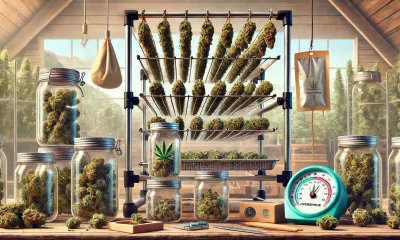
Two-way humidity packs can help regulate the air inside a suitable sealed container. For example, Boveda specifies 58% or 62% relative humidity options for cannabis, which differ from its higher-humidity cigar products. Select the pack type and size for its intended use and follow replacement instructions.
A humidity reading does not establish that a product is free of mold or other contaminants. A pack cannot reverse contamination, restore lost compounds, or make a questionable product suitable for consumption. Do not use flower showing mold or other signs of spoilage, and do not assume that smoking or cooking it will make it safe.
Choose Containers for Their Actual Function
Glass jars can be useful for properly dried homegrown flower, but clear glass still needs protection from light and an ordinary mason jar is not child-resistant. An intact seal, clean interior, appropriate size and secure storage location matter more than a cannabis-themed design.
Plastic packaging is not automatically unsuitable: commercial products use different materials and barrier designs. Follow the manufacturer’s instructions rather than assuming every dispensary package becomes inadequate after a few weeks. If transferring a product is necessary, preserve its complete label and keep different batches distinguishable.
Amazon (AMZN ) and other retailers sell jars, bags and lockboxes. Evaluate the closure, capacity and cleaning instructions; a product described as smell-proof is not necessarily airtight or resistant to a child’s access.
Edibles, Oils and Other Products Need Their Own Conditions
Flower-storage advice should not override instructions for a food or medicine. Perishable homemade edibles need appropriate food storage, including refrigeration when the recipe requires it. Refrigerated cannabis foods must still be labeled and secured away from children and other household food.
Oils, capsules, beverages and concentrates may have different storage requirements. Follow their labels and expiry or use-by instructions. A packaging date records an event; it is not necessarily a tested expiry date.
Common Storage Questions
Should flower go in the freezer?
Freezing is used in some controlled storage and processing settings, so it is not accurate to say it is only appropriate for bubble hash. For everyday use, repeated cold-to-warm handling can introduce condensation and make fragile material harder to handle. Follow product-specific instructions instead of improvising a freezer routine.
Does cannabis last indefinitely?
No container guarantees indefinite quality or safety. Starting quality, moisture, ingredients, handling and temperature all matter. An old product can remain intoxicating even when its aroma has faded; appearance cannot establish its remaining potency.
Which accessories are worth considering?
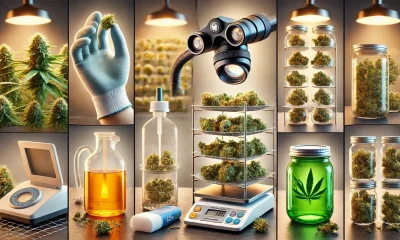
Start with a secure storage location and suitable packaging. Our guide to harvesting and storage tools explains what magnifiers, scales and humidity accessories can do, and where their limits lie.