Technology
5 Ways Disruptive Tech Is Revolutionizing the Cannabis Industry

 Add MyCannabis.com to your preferred sources on Google
The content on MyCannabis.com is for educational purposes only and should not be taken as medical advice.

Artificial intelligence and disruptive technologies are transforming nearly every industry, and cannabis is no exception. What began as an agricultural and wellness movement is rapidly evolving into a high-tech ecosystem powered by machine learning, data, and design innovation.
Today, the cannabis sector is leveraging tools once reserved for aerospace or medicine, from generative AI models that design new products to wearable health devices that track the body’s endocannabinoid responses. The result is a smarter, more connected, and far more personalized cannabis experience.
Here are the five leading AI-driven and disruptive technologies revolutionizing cannabis.
Swipe to scroll →
| AI Use Case | Primary Benefit | Example Application |
|---|---|---|
| Generative AI | Faster strain & product design | Predicting cannabinoid/terpene synergy |
| AR / VR | Immersive education & retail | Virtual dispensary or grow tours |
| Wearable Tech | Real-time health tracking | Biosensors measuring cannabis effects |
| Smart Energy | Sustainable cultivation | AI-controlled climate & lighting |
| 3D Printing | Custom devices & packaging | Ergonomic inhalers; hemp bioplastics |
1. Generative AI Assistance: From Strain Design to Business Strategy
Generative AI is not just a content tool, but it’s becoming a creative partner for cultivators, brands, and scientists. In the cannabis industry, it is helping companies reimagine everything from genetic mapping to marketing strategy.
On the scientific side, researchers are using generative AI models to analyze vast cannabinoid and terpene datasets. By simulating genetic crossbreeding or predicting chemical synergies, AI can suggest new strain formulations aimed at specific effects, such as pain relief without sedation, or creativity without anxiety. These simulations dramatically shorten R&D cycles that once took years.
For businesses, AI assistance now supports regulatory documentation, marketing copywriting, and even retail product recommendations. Dispensaries can deploy conversational AI chatbots to guide customers toward products that match their mood, tolerance, or desired outcome, all while remaining compliant with advertising restrictions.
Generative AI’s biggest value, however, lies in personalization. It enables brands to move from mass-market strains toward customized wellness solutions, using consumer data to refine future genetics and formulations. Cannabis is becoming intelligently cultivated, not just in greenhouses, but across digital frontiers.
2. AR and VR: Immersive Education and Retail Reinvented
The cannabis industry faces a persistent challenge: how to educate consumers about a complex plant while navigating tight marketing restrictions. Augmented and virtual reality are changing that dynamic, making cannabis education immersive, visual, and memorable.
Imagine a dispensary where customers slip on AR glasses to explore a virtual grow room, witnessing cannabinoid production in real time. Or a VR headset that transports medical patients into a guided meditation enhanced by their chosen cannabis strain. These experiences bridge the gap between science and storytelling, turning cannabis education into sensory engagement.
Brands are already experimenting with AR packaging, where a scan of the label unlocks interactive content: lab results, dosage guides, terpene education, or even farm tours. Meanwhile, virtual showrooms allow consumers to “visit” dispensaries remotely, exploring products before ever stepping inside, offering something that fosters connection in new ways with consumers.
3. Wearable Health Tech: Tracking Cannabis’s Effects in Real Time
Cannabis and health tracking are finally converging. Wearable devices, from smartwatches to biosensor patches, are beginning to measure how cannabinoids influence the human body on a moment-to-moment basis.
Imagine a patient wearing a health band that monitors heart rate, sleep quality, and stress levels after consuming a CBD tincture. AI interprets that biometric data to determine whether the product improved relaxation or disrupted REM cycles. Over time, the device builds a personalized profile, recommending dosage adjustments or optimal consumption times.
For medical cannabis patients, this data is gold. It provides measurable insight into efficacy and helps refine treatment protocols. For wellness users, it personalizes self-care routines, aligning strains or formulations with specific biofeedback trends.
As the Internet of Bodies expands, wearable health tech may become the key to validating cannabis’s therapeutic value, moving it from anecdotal experience to quantifiable science. The fusion of cannabis and AI-powered biometrics could ultimately redefine how we understand human wellness itself.
4. Smart Home Energy Integration: Sustainable Cultivation and Conscious Living
The cannabis industry has long wrestled with its environmental footprint, particularly energy-intensive indoor grows. But AI-driven smart home and smart building systems are beginning to solve that problem, ushering in a new era of eco-conscious cultivation.
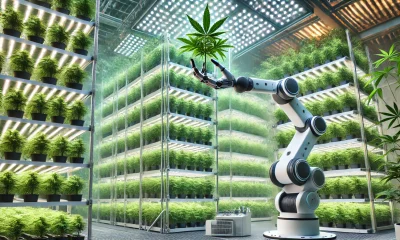
AI-powered energy management platforms monitor lighting, temperature, and humidity in grow rooms, dynamically adjusting to minimize energy waste while maintaining ideal plant conditions. These systems can sync with renewable energy sources, such as solar panels or smart grids, to optimize when and how power is used.
For home cultivators, smart grow kits are emerging that connect directly to AI assistants. Imagine asking your smart speaker, “How are my plants doing?” and getting a data-driven response about soil moisture, CO₂ levels, and nutrient cycles, complete with automated adjustments.
On the consumer side, smart home devices can help track when and how cannabis products are used, syncing with circadian lighting or aromatherapy systems to enhance relaxation. The result is an integrated ecosystem where cannabis, sustainability, and technology coexist seamlessly.
5. 3D Printing: Custom Devices, Edibles, and Beyond
3D printing has quietly entered the cannabis conversation, and its potential is massive. From creating precision-engineered vaporizers to custom edible molds and packaging, additive manufacturing is pushing the boundaries of what’s possible in design and production.
One of the most exciting applications lies in personalized consumption devices. 3D printing allows for ergonomic customization; think medical patients with limited mobility receiving tailored inhalers or adaptive rigs designed to suit their needs.
In the culinary world, researchers are experimenting with 3D-printed cannabis edibles that offer precise cannabinoid dosages and novel textures. Meanwhile, sustainable packaging made from biodegradable, hemp-based polymers can be printed on demand, reducing waste and shipping emissions.
By combining AI design tools with 3D printing, cannabis innovators can rapidly prototype, test, and deploy new products without large-scale manufacturing overhead. This decentralization empowers small brands and inventors, democratizing innovation in a way the industry has never seen before.
A Smarter, More Human Cannabis Future
The convergence of AI, immersive tech, wearables, and sustainable manufacturing is steering cannabis toward a future that’s as intelligent as it is intentional. These technologies are not replacing human creativity or care; they’re amplifying it.
Where early cannabis revolutions focused on legalization and normalization, the next wave will be defined by data, personalization, and design. Generative AI will write the formulas. AR and VR will tell the stories. Wearables will capture the results. Smart homes will sustain the process. And 3D printing will build the tools that bring it all to life.
The green revolution is no longer just about the plant; it’s about the intelligence growing around it.