Technology
Lighting the Way: How Blue LEDs Revolutionized Cannabis Cultivation

 Add MyCannabis.com to your preferred sources on Google

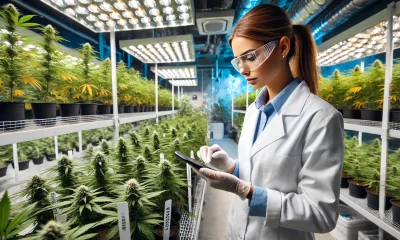
With technology advancing at an increasingly rapid rate, indoor cannabis cultivation has been transformed over the past decade. One of the most prominent examples of this is through the use of more versatile lighting solutions – namely Light Emitting Diodes or ‘LEDs’.
What LEDs Have to Offer
Through their design approach, LEDs can help indoor farmers optimize growth cycles and enhance cannabinoid production, all while using a fraction of the energy that was once needed, cutting down on waste heat and accompanying costs. Just think back to the early 2000s when a lack of snow on a roof and elevated power bills were tell-tale signs of illegal grow operations in residential homes. These indicators resulted from the huge consumption and heat generated by traditional, inefficient lighting systems such as Metal Halide (MH) and High-Pressure Sodium (HPS) – both types of High-Intensity Discharge (HIDs) lamps. However, this is no longer the case, with LEDs transforming the industry, rendering HIDs irrelevant. The following are a few of the key benefits of LEDs.
- Extremely energy efficient
- Safer due to less heat creation
- Full spectrum tunability (required to mimic natural sunlight and provide all wavelengths of light necessary for plant development)
- Affordable
- Small footprint
- Massive increase in lifespan (Incandescent = 1,000hrs vs. LED = 50,000hrs)
- Better performance in extreme temperatures
Notably, for the end user, LEDs are able to offer these benefits with next to no drawbacks outside of higher startup costs.
Lighting Technologies Through the Years
With LEDs becoming extremely commonplace, it is easy to overlook and take for granted just how much of a leap forward they represent with regard to lighting technology. From incandescent bulbs to Nobel Prize-winning blue LED diodes, this technology plays a role in countless industries.
Looking back, artificial lighting began with the incandescent bulb in the 19th century and was patented by Thomas Edison. These bulbs provided consistent light but were highly inefficient, converting most energy into heat. For many years, technological advancement was actually delayed due to incandescent bulbs being deliberately engineered to have short lifespans – a practice known as planned obsolescence, which ensured continuous demand but limited technological progress.
This practice of engineering shorter lifespans was institutionalized by the ‘Phoebus Cartel’, an alliance formed in 1924 between leading lightbulb manufacturers. The cartel was comprised of the following companies.
- Osram
- Philips
- General Electric
The cartel aimed to control the global lightbulb market by standardizing bulb lifespans to just 1,000 hours. While this may have maximized profits, it also stifled innovation, delaying the adoption of more efficient technologies. The cartel’s influence lasted for decades and has since become a warning of how such an approach can hinder technological progress.
By the mid-20th century, fluorescent lighting emerged, and while more efficient, it was flawed due to the use of mercury and the inability to tune the light spectrum. It wasn’t until LEDs arrived that a transformative leap forward was taken, and even then, the technology was limited due to a lack of full-spectrum light.
Finally, in 2014, various breakthroughs resulted in blue LEDs finally being developed, earning Isamu Akasaki, Hiroshi Amano, and Shuji Nakamura the Nobel Prize in Physics for that year. Simply put, the team behind these innovations unlocked the potential of blue LEDs, which have now become a cornerstone of modern lighting applications. Blue LEDs also paved the way for,
- Ultraviolet LEDs
- Blue Lasers
- Advanced-Data Storage (i.e. Blu-Ray)
- Sterilization Technologies
- Surgical Applications
- Off-grid, low-energy applications
By increasing the usability of LEDs in the real world, scores of industries could now tap into the massive benefits (i.e., full-spectrum tunability, 1/20th the energy requirements of incandescent bulbs, etc.) afforded by the technology – agricultural cultivation included.
LED Lighting in Cannabis Cultivation
Now that you have learned all about how LEDs came to be and what they have to offer, what does it all mean for the cannabis industry and modern cultivation practices?
Optimizing Growth Cycles
Modern LED systems provide growers with the ability to fine-tune the light spectrum produced. This is extremely beneficial, as it allows for mimicry of natural sunlight or the creation of conditions tailored to specific growth stages. For example, blue light promotes vegetative growth, while red light encourages flowering. By adjusting these wavelengths, growers can maximize yield and reduce the time plants need to mature.
LEDs also support photoperiod manipulation, a critical factor in cannabis cultivation. This precise control over light exposure enables growers to trigger flowering optimally, ensuring consistent production cycles. Note that photoperiod cannabis strains will flower based on the amount of light they receive, while auto-flowering cannabis strains will flower based on plant age, regardless of light received.
Enhancing Cannabinoid Production
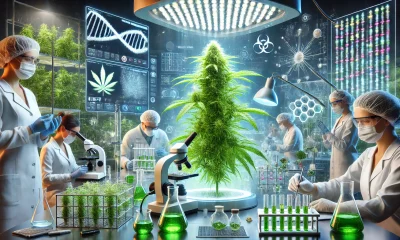
Alongside the spreading legalization of cannabis has been the completion of many studies that have shed new light on the plant’s amazing benefits and how we can utilize them. For example, one such study showed that specific light spectra can influence the production of cannabinoids and terpenes, the compounds responsible for the plant’s therapeutic and aromatic properties.
By utilizing full-spectrum or targeted LED systems, growers can tailor these profiles, creating higher-quality, customized strains boasting greater market value.
Improving Energy Efficiency
Traditionally, indoor cannabis farms were extremely, and notoriously, energy-intensive. In fact, it was the lighting systems that typically accounted for the largest portion of operational costs. LEDs have upended this fact, as they are able to offer unmatched energy efficiency.
With LEDs already 20x more efficient than incandescent bulbs, the difference in energy requirements becomes even more stark compared to the HIDs used in cannabis cultivation. Here, LEDs consume up to 60% less power than high-pressure sodium (HPS) lights.
Additionally, LEDs generate minimal heat, reducing the need for extensive cooling systems and lowering energy consumption even further.
Automation and AI
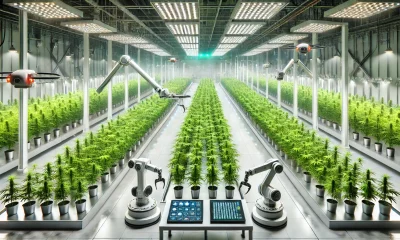
Finally, LEDs have benefitted due to other technologies that have arisen at the same time, which allow for remote automation. This means cutting down on required labor and monitoring by pre-scheduling tasks, in addition to remotely monitoring conditions for adjustments in real-time.
Remote automation is also rapidly advancing as AI solutions are being integrated. One example of a benefit that should arise from this is for LED systems controlled by AI to gain the ability to predict plant needs based on historical data. This use of these complimentary technologies should usher in previously unattainable precision agriculture, where every variable—from light intensity to spectral composition—is optimized for maximum efficiency and yield.
A Bright Future Rooted in History
The evolution of lighting technology – from the incandescent bulb to cutting-edge LEDs – was long overdue. While planned obsolescence once hindered progress, breakthroughs like the blue LED diode have reshaped industries and driven sustainable innovation.
As the cannabis industry continues to mature, LED lighting stands out as a cornerstone of its future, facilitating a greener, more efficient industry.