Cannabis Research
Could Frequent Cannabis Use Disrupt the Body’s Stress System?

 Add MyCannabis.com to your preferred sources on Google

Cannabis is often associated with relaxation. For some people, using cannabis can temporarily make stressful situations feel easier to manage, quiet racing thoughts, or provide a subjective sense of relief. But what happens beneath that feeling of calm?
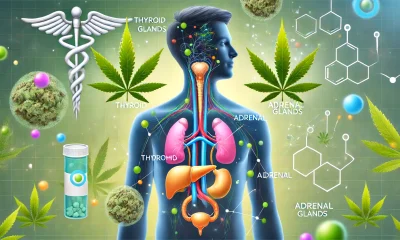
A growing area of cannabis research is looking beyond how people feel after using cannabis and examining how frequent use may interact with the body’s biological stress systems. One system receiving particular attention is the hypothalamic-pituitary-adrenal (HPA) axis, a complex network that helps the body respond to stress.
An emerging study1 involving adults who frequently use cannabis offers an intriguing piece of that puzzle. The researchers did not find exactly what they expected when they examined the body’s morning cortisol response. Instead, they uncovered a different signal that may be more closely connected to problematic cannabis use.
How Cannabis and Stress Are Connected
Stress and cannabis use have a complicated relationship. Stress can contribute to cannabis use, particularly when people use it as a way of coping. At the same time, frequent cannabis use may influence the body’s longer-term stress response systems. The relationship is not necessarily one directional. A person experiencing significant stress may turn to cannabis more frequently, while patterns of cannabis use could potentially interact with how the body responds to stress over time.
Cortisol provides researchers with one way to study this relationship. Often called the body’s “stress hormone,” cortisol is produced through activity involving the HPA axis. Cortisol naturally follows a daily rhythm, with levels changing throughout the day. One particularly interesting period is immediately after waking.
What Is the Cortisol Awakening Response?
The cortisol awakening response, or CAR, refers to the rise in cortisol that typically occurs during the first part of the morning after a person wakes. Researchers can estimate this response by measuring cortisol shortly after awakening and again about 30 minutes later. The CAR is useful because it provides a window into HPA-axis activity and how the body prepares to meet the demands of the day.
Previous research has suggested that frequent cannabis use may be associated with changes in this morning cortisol pattern. That raised an important question: Would adults who frequently use cannabis show a different cortisol awakening response than people who use little or no cannabis?
Researchers set out to investigate that question while also examining whether people’s subjective experiences of stress corresponded with their biological cortisol levels.
What the Cannabis Cortisol Study Found
The study included 82 adults: 39 people who used cannabis frequently and 43 healthy controls. The frequent-use group was defined as using cannabis at least three days per week during the previous year, with cannabis use during the previous month. Participants collected saliva samples on two consecutive weekdays. Samples were taken when they woke up, approximately 30 minutes later, and again in the evening. Participants also reported their subjective stress levels.
The researchers expected that frequent cannabis users might have a blunted cortisol awakening response compared with the control group, but that is not what they found. There was no statistically significant difference in the cortisol awakening response between the two groups. However, the more interesting finding came from the starting point.
Frequent Cannabis Users Had Higher Morning Cortisol
Although the rise in cortisol was not significantly different, people who frequently used cannabis had higher cortisol levels at the moment of awakening than healthy controls. Subjective stress was also positively associated with cortisol at awakening, meaning people reporting greater stress tended to have higher cortisol levels at that time.
However, researchers found another connection that may be even more important. Higher awakening cortisol among frequent cannabis users was significantly associated with cannabis-related consequences. The analysis found a positive relationship between awakening cortisol and scores reflecting consequences associated with cannabis use, while the number of days cannabis was used was not the key relationship highlighted by the finding. That distinction could change how researchers think about cannabis and stress regulation.
Cannabis Frequency May Not Tell the Whole Story
It can be tempting to assume that using cannabis more often automatically means greater biological disruption. However, the study suggests the relationship may be more complicated. The researchers found that elevated awakening cortisol tracked cannabis-related consequences rather than simply representing a measure of how frequently someone used cannabis.
That raises an important possibility, as problematic patterns of cannabis use may be more relevant to stress-system changes than frequency alone. For instance, someone can use cannabis frequently without necessarily experiencing significant cannabis-related problems, while another person may develop consequences that indicate their relationship with cannabis is becoming more difficult or disruptive. The findings do not necessarily establish that problematic cannabis use causes higher cortisol, but they do show an association that deserves additional research.
Does Cannabis Permanently Alter Cortisol?
Based on this study, we cannot definitively say that cannabis permanently alters cortisol. This is one of the most important distinctions to make when interpreting the findings. Higher cortisol upon awakening is a potential biological signal, not evidence that cannabis has permanently damaged someone’s stress system.
The study was observational, meaning researchers measured cannabis-use patterns, stress, and cortisol rather than assigning participants to use cannabis and then observing whether their cortisol changed. Consequently, the findings cannot establish cause and effect.
It is also possible that pre-existing differences in stress regulation contribute to cannabis use, that cannabis use contributes to changes in stress physiology, or that both processes influence each other. Future studies will be needed to determine whether these stress-system differences existed before frequent cannabis use or developed after it.
Cortisol Is Not a Cannabis Use Test
The finding should also not be interpreted as suggesting that an elevated morning cortisol level can diagnose problematic cannabis use. Cortisol naturally varies between individuals and can be influenced by numerous factors. A single elevated measurement does not establish that someone has a cannabis-related problem, nor does it demonstrate that cannabis caused the elevation.
Instead, the researchers suggest that awakening cortisol could potentially serve as a neurobiological marker worth investigating in the context of problematic cannabis use. That is a much more cautious, and scientifically appropriate, conclusion.
Why These Findings Matter
The study adds another layer to the increasingly complex picture of cannabis and stress. Rather than showing that frequent cannabis users simply have a different morning cortisol response, the research suggests that the body’s baseline cortisol level upon awakening may carry information about cannabis-related consequences.
Interestingly, the findings also did not replicate earlier research suggesting that frequent cannabis users have a blunted cortisol awakening response. That difference highlights how much remains to be learned about cannabis, stress physiology, and the factors that may influence study results. Future research could help determine whether elevated awakening cortisol is a consequence of problematic cannabis use, a pre-existing vulnerability that contributes to problematic use, or part of a two-way relationship between stress and cannabis.
For now, the message is not that cannabis use permanently damages the body’s stress system. Instead, the research points toward a more nuanced question: could the way a person uses cannabis, and the consequences associated with that use, matter more than frequency alone when it comes to stress biology? That question may prove increasingly important as researchers continue exploring how cannabis interacts with the body’s natural stress-response system.
References:
1. https://publications.sciences.ucf.edu/cannabis/index.php/Cannabis/article/view/390