Interviews
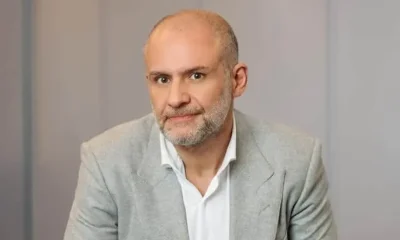
Anne Donohoe, Managing Director and Co-Founder of Alternatives Practice at KCSA – Interview Series

 Add MyCannabis.com to your preferred sources on Google

Key PointsCannabis marketing restrictions make public relations one of the few credible channels…
View more
- Cannabis marketing restrictions make public relations one of the few credible channels left for brands to tell their story.
- Psychedelics operate like a healthcare vertical where clinical data and regulatory pathways matter more than consumer retail tactics.
- Federal rescheduling has opened capital markets for medical operators while leaving most of the adult-use market unchanged.
As cannabis brands expand and the industry becomes more normalized, it is increasingly important for companies and professionals to engage with the media and the broader public relations landscape. Building a media profile and securing interviews with popular outlets can help establish a trustworthy reputation while strengthening the relatable, human aspects of a brand’s operations and products. Still, it can be a fine line to walk given the steep marketing restrictions cannabis brands face across both digital platforms and traditional advertising avenues.
To take a closer look at why cannabis brands should build a stronger, more open media profile—and how that multifaceted process has evolved over the years—MyCannabis.com spoke with Anne Donohoe, Managing Director and Co-Founder of Alternatives Practice at KCSA.
How would you say that studying journalism at Monmouth University gave you both an advantage and a better understanding of the exciting world of PR and advertising?
I didn’t set out to end up in PR. I was a dual major in journalism and communications, and I always assumed I’d become a journalist. Communications felt like an afterthought at the time. I think I took one PR class. I loved writing and reading, and I came from a real news household. We got three newspapers a day growing up, so I had a healthy respect for journalism from an early age.
I transferred to Monmouth after two years at UMass Amherst, and because of the timing of that transfer, I had an extra, lighter semester to fill. I took an internship with a small local firm, DanLee Public Relations, run by a woman named Ann Willets (she was Ann Higgins at the time), still telling myself I was just trying PR out while I figured out journalism. My first clients were Wild Turkey Bourbon, Jameson Irish Whiskey and Laird & Company, the oldest distiller in the country, based in Colts Neck, New Jersey, which was basically in my back yard at the time!
Ann offered me a job before I even graduated. My parents’ reaction was essentially: “Hey you know what? It’s a job in hand, take it!” and I’m glad I did. Ann was an incredible mentor, and working at a business with only four people showed me what it takes to run something from the ground up, from answering the phones, to filing, right down to pitching the winner of a Wild Turkey calling contest, which was about as unglamorous as it sounds. I kept advancing, and at some point I realized this paid better than journalism ever would, and I still got to write and work with journalists every day. So I decided to see where it would take me.
Knowing how a newsroom works, what makes a story and what a reporter needs on deadline, has been my biggest advantage in this business.
When you first started with KCSA, what were the first clients you worked with?
I started as an account executive on a B2B online legal services account and, more notably, Arbitron, the radio ratings company that was really a pioneer in media measurement. Arbitron was essentially the radio equivalent of what Nielsen does for television. For years, listenership had been tracked through print diaries, where people wrote down what they thought they’d listened to. Arbitron rolled out technology that could actually detect real-time listening, which changed how ad buys were made.
We also worked with TNS Media Intelligence, which tracked advertising spend. I could pull up exactly what an advertiser had spent on TV in a given quarter. That put me in daily contact with reporters at the Wall Street Journal, the New York Times and USA Today, and it taught me how much journalists rely on data as an economic indicator. It amounted to a business education in how media works, where the money moves and the impact that has on what people are exposed to.
What were the most notable ways that your duties as Managing Director change depending on the industry that your client operated in?
Honestly, it doesn’t, fundamentally. Whether it’s a hearing aid company or a cannabis company, the strategy still has to lead to tactics that work and a demonstrable outcome, and that responsibility sits with me. What shifts is my level of involvement on a given account. On some, someone else takes the first pass at plans and I can take a lighter touch. On others, I’m the one drafting the byline, the press release or the commentary. Every client is different, but the core responsibility of the role doesn’t change.
Since you’ve worked for KCSA for quite a few years now, how did both your duties and the services that KCSA as a company offers change with the advent of social media? How revolutionary was the rise of social media platforms for the fields of PR and advertising?
It didn’t just change what we do, it changed how we think about the audience entirely. In one sense, it broadened everything. There are now dozens of channels to reach people, from Instagram to Reddit to X to Substack. In another sense, it narrowed things. Getting a client on a podcast with 10,000 monthly listeners is a much more specific audience – and perhaps more relevant for the client – than a network television segment used to be. It expanded our field and narrowed it at the same time.
We’re still figuring out exactly how it fits into PR, because the lines between PR, marketing and advertising are continuing to blur. We don’t do media buying, and we’re not creatives on the advertising side, but we’re increasingly asked to weigh in on messaging across those channels because we know our clients’ stories better than anyone. Even if we’re not the ones pushing content out to every channel, we’re the ones making sure it’s aligned and amplified. It makes sense for us to help shape it since we’re closest to the message.
What major trade shows/conventions have you and the team at KCSA helped produce? How have those conventions evolved since KCSA first started assisting in their organization and production?
The trade show we’ve built our reputation on in the alternatives space is Psychedelic Science. We worked on Psychedelic Science 2023, Psychedelic Science 2025 and we’re now starting work on Psychedelic Science 2027 (“PS27”). It sits in the psychedelic realm, though there’s real overlap with cannabis, culture, music, art, wellness, etc. It literally takes over the city of Denver for a full week – it’s an awesome experience!
Our role for the Psychedelic Science Conferences is “managing the media” though that can mean many things. We want to make sure we get the story right and that we provide media with reasons to attend. We have to bring them compelling stories, credible sources and an experience that makes their editors sit up and say “of course we’ll send you to Denver! You can’t miss Psychedelic Science!”
We vet badge media, connect them with sources and help companies plan news announcements around the event, all of which makes us better at serving our clients the rest of the year. People tend to focus on the keynote speakers and the excitement of a show, but a lot of the real work is logistics — like setting up a press room, creating a space for the media to work, for content creators and documentarians to get the content they need. We also need to be dynamic and able to pivot in a moment’s notice.
In 2025, we had a moment like that. Colorado Governor Jared Polis announced pardons for people convicted of psilocybin-related offenses, timed to a keynote he gave at the event, and we had no advance notice. We moved fast and ended up with strong media coverage stemming from that news. We also won an award for our work on the 2023 show: the PRNEWS Platinum Award for Best Conference Marketing/PR Campaign, which was validation both for us and for our client, MAPS, and helped solidify their position in the space.
When did KCSA begin to work with cannabis brands, and what were the first few cannabis client projects like? After so many years in business, did you have any apprehension or concerns about working with cannabis clients?
We are in our 11th year in cannabis. Our first real project was helping a New York dispensary license applicant get local press. They didn’t ultimately win the license, but they got significant coverage, and we learned a lot in the process.
The formalization of KCSA’s cannabis practice a couple of years later coincided with a wave of medical cannabis companies needing capital. There wasn’t a U.S. public marketplace for them, given its Schedule 1 status, so many went public in Canada instead. There wasn’t anyone serving that new group of companies from a communications standpoint. We already had experience in B2B communications and investor relations, and a lot of these companies weren’t used to quarterly investor calls, non-deal roadshows or talking to business media. Some had operated in a legal gray area for years and weren’t eager to talk to the press at all. But once you’re publicly traded, you’re under scrutiny, and you need to be comfortable engaging with both media and investors.
We partnered with a number of cannabis clients and helped shape their stories, including correcting some of the early narratives (we all remember the “The Making of a Marijuana Millionaire” storylines!). In reality, the U.S. market was, and still is, limited, and we’re still working through federal regulatory questions today. It was taboo enough at the time that a few existing clients bristled at us entering the space, and we heard every cliché pot joke imaginable, but at the end of the day, we are among the first integrated public and investor relations firm serving the industry – and that’s something I’m really proud of.
Compared to other industries and clients you’ve worked with, why is cannabis such a unique field to provide PR/advertising services for? How is it different from the non-cannabis clients you’ve helped before?
Cannabis is federally illegal, and that changes everything about how you can communicate. Almost any other company can build a straightforward advertising and marketing program, like buying a billboard, buying TV or online ads, and printing flyers. Cannabis companies face real regulatory restrictions that make most of those channels unavailable, even now. Some still have their social media pages taken down and have challenges with bank accounts. This makes PR one of the only legitimate, accepted avenues cannabis companies have to tell their story — by talking about the people who use cannabis, correcting the record when it comes to the failed War on Drugs, the regulations shaping the industry and its impact on the economy and on farming. The stories really are endless! It made PR more essential in cannabis than in almost any other industry I’ve worked in.
What other businesses and industries are included in the Alternative Practice division at KCSA? When was that division first formed, and how do you rely on your experience with cannabis clients when working with psychedelic clients?
The Alternatives Practice was formed about 11 years ago, starting with cannabis. We didn’t fully know what it would become at the time, because the partners were just taking a chance on this – we didn’t know it would lead to a more formalized practice for us. As we learned how to communicate within a highly regulated industry, we realized that skill set could be applied well beyond cannabis. Cannabis and psychedelics are, at their core, two very different beasts, even though some people classify cannabis as a psychedelic. Cannabis grew up as a patchwork of state-level regulation because the federal government wasn’t moving, first through medical programs and then into adult use, which today is really treated like a consumer product — you walk into a dispensary, show you’re over 21, and buy it much like alcohol or tobacco. Psychedelics, on the other hand, behave much more like a biotech or healthcare vertical. Working with clients like MAPS, along with organizations doing FDA-track research, taught us the value of real clinical data and how to take that data through a research-and-development pathway to show regulators these substances have a measurable, real-world impact on people who are suffering. Different roads, but both industries are ultimately trying to get access to products for the people who need them most, and that shared mission is what carries over for us from cannabis into psychedelics.
Beyond cannabis and psychedelics, the Alternatives Practice tends to pick up the clients and categories that don’t fit neatly into our other groups — media, advertising and technology; healthcare and biotech; women’s health and consumer products; financial services. We take on the businesses built around an underserved audience or a genuine unmet need, often with a complicated story to tell. Together, we keep shaping what we want this practice to be. Who knows what it’s going to look like after December 11th when the hemp ban comes into play, and how will the medical market embrace Schedule III status? What does that mean for the adult-use markets? Likewise for psychedelics, we’re in a race between at least three companies to see who will make it across the FDA finish line first. This category is so dynamic, which makes it both fraught and exciting. At the end of the day, the team is passionate about mental healthcare, wellness and working with quality clients who have compelling stories that need telling.
From your experience and that of KCSA team members, why was it so prestigious to receive the PRNEWS Platinum Award for Best Conference Marketing/PR Campaign? How was KCSA’s work with the Psychedelic Science 2023 Conference with MAPS truly award-worthy?
The important thing to understand about KCSA is that we’ve traditionally not been great about doing PR for ourselves. Taking the time to actually submit for recognition showed that we can compete on a larger scale and punch above our weight as a mid-sized agency.
That ties directly into why the MAPS campaign was award-worthy in the first place. MAPS is a nonprofit, so budgets were tight, and that made earned media and storytelling all the more important. We didn’t have the luxury of big media buys or paid social spend. What we did instead was meet reporters where they were, connect them with the sources they needed to tell their stories, and build excitement and ticket sales before the conference even opened its doors.
We tend to identify with an underdog mentality at KCSA, maybe even some imposter syndrome, where we don’t often stop to say, what we did here is genuinely special – but that’s also most PR people. Taking the time to look at that work in full context and put it up against agencies with much bigger budgets and bigger names, and still walk away with the award, was a real feat, and it felt validating. Additionally, our work on Psychedelic Science 2025 was a finalist for the PR Daily Nonprofit Communications Awards. Being nominated alongside some of the best firms and organizations doing great work in the nonprofit and events space is meaningful on its own.
How do you think a federal rescheduling or another reform of cannabis on the federal level will change the fields of PR and advertising for cannabis businesses?
As with everything in cannabis, the answer depends. Medical cannabis moved to Schedule III in April, and we’re already seeing what that means for companies in that lane. They’re out from under 280E, and they now have a path to U.S. capital markets. Trulieve carved out its medical business and listed on the NYSE in June, and Curaleaf has signaled it intends to follow. But that’s a small piece of the overall industry. Adult-use cannabis, which makes up the majority of the market, wasn’t covered by the April rule, and broader rescheduling is still unresolved. So the fight there continues largely unchanged, illicit market included. It’s a step forward, and I don’t want to diminish that, but I also want to be realistic: it’s a step, not the definitive one.
Thank you for joining us, Anne! For more information on KCSA, please visit its website.