
Interviews
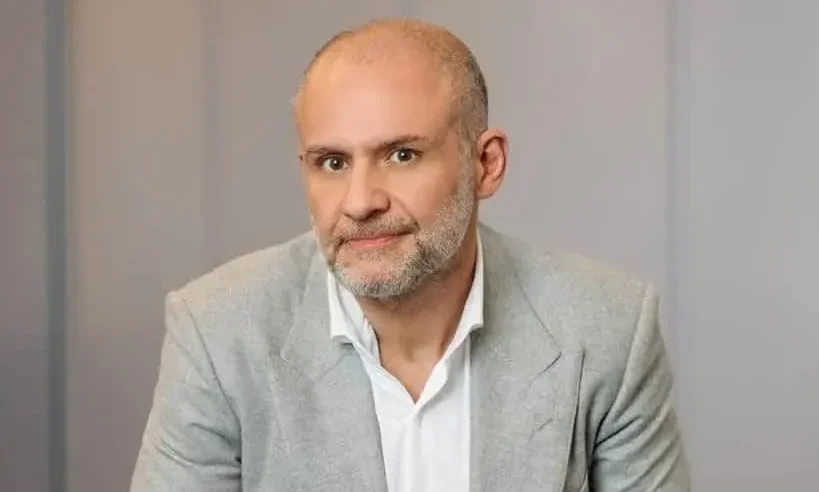
Ronn Torossian, Founder and Chairman of 5WPR – Interview Series

 Add MyCannabis.com to your preferred sources on Google
As the U.S. cannabis industry continues to evolve rapidly, many operational and compliance questions remain regarding how best to navigate whatever unpredictable changes lie ahead. Among industry professionals, one of the most pressing topics is the integration of AI and machine learning systems across all operational departments—especially within vital marketing and PR functions. For plant-touching cannabis brands and ancillary companies alike, the capabilities of Large Language Models (LLMs) could prove game-changing, regardless of whether a business operates B2B or B2C.
Given the extensive list of marketing and advertising regulations that cannabis brands already face, how AI systems will operate within such a heavily restricted environment is a critical question. To better understand these concerns, mycannabis.com spoke with Ronn Torossian, Founder and Chairman of 5WPR.
What subjects did you study at the University at Albany? How did your studies at such a prestigious school give you an advantage when you first started working in PR and marketing?
My time at the University at Albany wasn’t about sitting in a lecture hall memorizing abstract theories; it was an active laboratory for understanding human psychology, communications, and aggressive advocacy. As a Bronx kid navigating campus leadership and student media, I learned how messages shift perceptions in real time. I quickly realized that effective public relations is a collision of three things: journalism, psychology, and strategic positioning. That realization drove me to build a more proactive, fast-moving agency model when I founded 5WPR in a tiny rooftop office with just an intern.
Before founding 5W, what experiences and roles did you hold in PR and marketing? How did those early years truly help you strengthen your skills and expertise in those fields?
Before launching 5W, I cut my teeth in political campaign management, international advocacy, and corporate PR. A major turning point was working in Israel for the Likud Party, including campaigns with the Mayor of Jerusalem and multiple Prime Ministers. Later, I served as Vice President at Rubenstein Associates. When you manage high-stakes political firestorms and corporate crises under intense public scrutiny, you learn speed and tactical navigation quickly. It taught me to focus strictly on measurable business results and narrative control, rather than hiding behind passive media updates.
What in particular influenced you to found 5W? What were some widespread or otherwise common PR and marketing-related problems that you hoped to solve across industries with 5W?
I founded 5WPR in 2003 because the traditional PR establishment was painfully slow, passive, and bureaucratic. Agencies were billing clients for over-analyzing problems rather than moving the needle. I wanted to build a hyper-agile, entrepreneurial firm that could match the breakneck speed of modern media. We broke the traditional agency mold by executing aggressive, results-driven campaigns for brands that wanted to win market share, not just collect polite press clippings.
What roadblocks or obstacles did 5W when first operating? What industries were harder to break into and find clients in than others?
We started as an independent agency with just an intern, three clients, and zero safety net. When you’re the new, aggressive player in town, breaking into traditional sectors like legacy finance or corporate healthcare means overcoming massive institutional inertia. Established brands were comfortable with slow, predictable PR playbooks. We forced our way into those rooms by proving that our relentless execution delivered immediate market impact without compromising on regulatory compliance.
When did 5W first begin working with cannabis/hemp brands? Did you or another member of the 5W team hold any professional concerns at first about working with cannabis/hemp companies, considering the legal grey area that the cannabis industry exists in?
5W has always thrived on representing category-defining disruptors in emerging growth markets, so entering the hemp-derived space early with trailblazing brands like WYNK and Uncle Arnie’s was a natural fit. We didn’t view the legal gray areas with hesitation; we viewed them as a massive communications opportunity. Navigating hyper-fragmented, state-by-state regulatory landscapes is essentially a mix of corporate positioning and intense crisis management, which is our exact wheelhouse.
Given that 5W works with so many different industries, what are some examples of frequent PR/marketing-related issues that 5W’s cannabis clients more than clients in other industries?
Compared to our clients in mainstream sectors like beauty, technology, or food and beverage, cannabis operators face a highly restricted advertising ecosystem. The single most defining issue is the total advertising blackout enforced by major digital platforms, national television, and radio networks. While mainstream consumer packaged goods brands can easily scale campaigns through paid digital advertising channels, cannabis operators are entirely cut off from these traditional routes, forcing them to operate with significantly constrained outreach methods.
This deep discrepancy in marketing access creates a severe operational imbalance across the sector. As documented in our agency research on The Cannabis Communications Gap, legal cannabis brands spend eighty percent less on marketing as a percentage of revenue than traditional consumer packaged goods competitors. Because paid options are blocked, operators frequently underfund the alternative organic channels that actually work, such as secure influencer partnerships, search engine optimization, and earned media.
By highlighting these structural deficits, 5WPR counsels cannabis clients to pivot away from restricted paid strategies and instead build robust, independent communications infrastructures that establish real consumer trust and long-term brand authority.
From your experience and that of other 5W team members, do strictly CBD/hemp-only companies still the same PR/marketing-related issues that licensed, THC-containing cannabis brands do? Even with the 2018 Farm Bill and far more federal acceptance, what are some problems that hemp/CBD brands often when advertising?
Even with the 2018 Farm Bill, hemp and CBD brands face distinct digital restrictions that differ from licensed THC operations. While hemp companies possess a clearer path to traditional banking, they encounter severe algorithmic censorship because major digital platforms often fail to distinguish between hemp and THC. This lack of automated nuance creates constant compliance hurdles, sudden ad account suspensions, and restricted search visibility on mainstream platforms.
To bypass these systemic ad blocks, hemp companies must rely on earned authority rather than paid digital spend. This critical friction point is why 5WPR tracks how information fragmentation affects hemp market presence in the 5WPR Cannabis AI Visibility Index.
Our research proves that securing unbiased, third-party editorial coverage is the most reliable way for hemp brands to train generative engines to trust their products. By building a strong baseline of independent media mentions, companies can maintain consistent digital discovery even when standard advertising channels block their category.
As someone extensively familiar with advertising on digital platforms, what major changes would need to occur in order for Google/Alphabet and Meta-owned platforms to become more friendly towards cannabis brands advertising on those platforms? Would a rescheduling or another reform on the federal level need to occur, or is it more of a company policy that would need to change?
Digital platforms like Google and Meta restrict cannabis advertising because their corporate policies align strictly with federal law. A formal shift like federal rescheduling or descheduling must occur first, as these platforms will not assume the compliance risks of a federally prohibited substance. Once federal reform passes, companies will replace blanket bans with age-gated, geotargeted advertising models similar to alcohol or pharmaceuticals.
This policy shift will trigger a massive digital rush as traditional consumer brands enter the market. To survive this competition, cannabis operators must build organic digital authority before paid ads open up, a transition we analyze closely in the 5WPR Cannabis AI Visibility Index.
At 5WPR, we emphasize that true visibility cannot be bought instantly through advertising alone. As outlined in our agency research on Earned Media and AI Search Visibility, securing independent, third-party media coverage remains the core foundation for ensuring a brand is trusted and cited across the changing digital landscape.
What are some notable ways that AI and machine-learning systems can assist in cannabis PR and marketing, both on a B2B and B2C level? Which departments in cannabis operations would particularly benefit from AI and machine-learning systems?
On a B2B and B2C level, generative engines and machine learning systems fundamentally change how brands claim digital authority. For B2B cannabis operations, machine learning tools excel at predictive market analysis and monitoring complex state-by-state supply chain shifts, allowing companies to tailor their corporate messaging to exact industry pain points. On the B2C side, these systems help brands analyze vast consumer sentiment trends, optimize localized audience segmentation, and predict hyper-targeted consumer preferences without violating strict regional compliance boundaries.
The specific departments within cannabis operations that stand to benefit most from this technology are compliance, risk management, and product marketing. Because the industry deals with fragmented state laws, compliance departments can use specialized machine learning models to track changing regulations in real time and automatically flag regional marketing vulnerabilities. Simultaneously, product marketing teams benefit by utilizing data-driven predictive modeling to map consumer demand patterns, ensuring that localized campaign strategies precisely match available inventory. Navigating these highly localized algorithmic shift behaviors is a core focus we continuously monitor through the 5WPR Cannabis AI Visibility Index.
For public relations teams specifically, the primary advantage lies in understanding how third-party content influences automated brand visibility. Rather than focusing solely on traditional keyword optimization, PR departments must build an organic, highly credible digital footprint that algorithms recognize as authoritative. As detailed in our comprehensive agency research on Earned Media and AI Search Visibility, secure brand placements across independent media platforms remain the single most effective way to train AI systems to cite and trust a cannabis brand. By integrating these technical insights across corporate departments, 5WPR helps operators protect their digital presence and build lasting authority before mainstream markets shift.
How would you address the concerns that some cannabis industry professionals and experts may have over AI usage in industry operations? How would you best quell those worries?
To address AI concerns in the cannabis industry, we look at how legal fragmentation produces a highly volatile information landscape, often causing generative engines to hedge or refuse answers altogether. The best way to quell those worries is to focus on the essential harmony between artificial intelligence and human intelligence. Cannabis professionals frequently fear AI because they worry about losing the human element or committing critical compliance violations across differing regional guidelines.
At 5WPR, we advise brands that AI is not a replacement for human judgment but a powerful collaborator. While machines can help analyze vast regulatory frameworks, track state-specific compliance, and map localized medical topics, human expertise remains irreplaceable for final verification, ethical oversight, and authentic brand storytelling. Proving that human-vetted, expert-led AI frameworks actually reduce legal volatility is the key to reassuring skeptics and securing a digital footprint, a strategy we map out extensively in the 5WPR Cannabis AI Visibility Index.
Whenever federal cannabis reforms are finally implemented, what do you think the biggest ripple effects will be for the marketing and PR side of cannabis operations that 5W specializes in?
The implementation of federal cannabis reform will immediately reset the digital and mainstream media landscape. The biggest ripple effect for cannabis marketing and PR will be the opening of traditional advertising channels on platforms like Google or Meta alongside the immediate standardization of what our generative engine optimization practice calls the AI citation surface.
Right now, the market suffers from an information deficit due to federal restriction. Once federal reform hits, mainstream brands will rush in, causing an algorithmic land grab. The specific ripple effect that 5WPR specializes in navigating is the shift from localized guerrilla marketing to institutional corporate communication. As shown in our agency research on Earned Media and AI Search Visibility, the brands that build a robust media and content infrastructure during the volatility will inherit massive citation equity. Those waiting for federal clarity will find the window abruptly closed as major consumer packaged goods companies crowd the market.
Thank you for joining us, Ronn! For more information on 5WPR, please visit its website.



