Hemp
Could Hemp Feed Astronauts in Space?

 Add MyCannabis.com to your preferred sources on Google
The content on MyCannabis.com is for educational purposes only and should not be taken as medical advice.

As humanity sets its sights on Mars, the Moon, and beyond, the question of how to sustain life far from Earth grows increasingly urgent. NASA, private companies, and international space agencies have poured years into researching sustainable “space farming,” but one potential crop has been largely overlooked: hemp.
More than just a fiber plant or a source of CBD, hemp may hold the keys to long-term human survival in space. From its incredible nutritional density to its air-purifying and carbon-recycling properties, hemp’s versatility could make it one of the most valuable crops ever launched into low earth orbit.
Let’s explore how this ancient plant could help feed, clothe, and even sustain the astronauts of tomorrow.
The Nutritional Potential of Hemp in Space
Swipe to scroll →
| Nutrient | Hemp Seeds | Soybeans | Spinach |
|---|---|---|---|
| Protein (per 100g) | 31g | 36g | 3g |
| Omega-3 & 6 Ratio | 1:3 | 1:7 | 1:1 |
| Iron | 8 mg | 15 mg | 2.7 mg |
| Magnesium | 700 mg | 280 mg | 79 mg |
Feeding astronauts in deep space presents one of the biggest challenges in modern exploration. Food must be lightweight, shelf-stable, and nutritionally complete, as long missions to Mars could last years, making traditional pre-packaged meals impractical. That’s where hemp comes in.
Hemp seeds are a nutritional powerhouse. They contain complete protein, meaning they provide all nine essential amino acids, something rarely found in plant sources. Roughly 25–30% of the seed is protein, on par with soybeans, but easier to digest.
They’re also rich in omega-3 and omega-6 fatty acids in an ideal ratio for human health, supporting heart, brain, and cellular function. Add to that an abundance of essential minerals such as magnesium, zinc, and iron, and hemp starts looking like the perfect astronaut superfood.
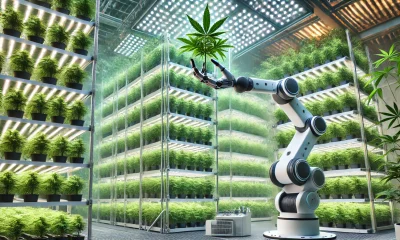
But the real kicker? Hemp can provide this nutrition sustainably. Unlike many crops that demand extensive soil management or water use, hemp grows rapidly in various environments and climates, producing high yields even under stress. Scientists envision that future space missions could cultivate hemp microgreens or sprouted hemp seeds in hydroponic or aeroponic systems aboard spacecraft or Martian habitats, providing fresh, nutrient-rich food.
Life-Support Benefits: Oxygen, Carbon, and Biomass in Space
Beyond nutrition, hemp’s biology could also make it a cornerstone of closed-loop life support systems, the self-contained ecosystems needed for humans to survive beyond Earth.
Every plant in space agriculture serves two primary functions: producing oxygen and capturing carbon dioxide. Hemp excels at both. On Earth, hemp is one of the fastest carbon-sequestering plants known, capable of absorbing more CO₂ per acre than most tropical forests. In a sealed environment, that means cleaner air, improved carbon balance, and a healthier breathing atmosphere for astronauts.
Its rapid growth cycle, which can range from 8 to 12 weeks, makes it ideal for continuous rotation. As one batch matures, another can be seeded, ensuring a constant supply of oxygen, biomass, and food.
Even the plant’s byproducts could be invaluable. Stalk fibers can be converted into biodegradable materials for 3D printing habitat components or used as natural insulation. Hemp hurd, the woody core of the stalk, can potentially be mixed with lunar or Martian regolith to create lightweight, durable “hempcrete” for building structures.
The leaves, roots, and other non-edible parts could be composted or processed into bioplastics, supporting the circular systems essential for long-term habitation. Hemp’s multifunctionality makes it an all-in-one resource. It not only can offer nourishment but also helps build and sustain their living environment.
Research Pathways: From Earth’s Labs to Lunar Greenhouses
While hemp farming in space remains theoretical for now, the foundation is being laid. NASA and other research institutions have already begun testing how various crops, from lettuce to wheat to potatoes, grow under microgravity and radiation conditions. These “space crops” are chosen for their efficiency, nutritional value, and ability to adapt to artificial ecosystems.
So far, hemp hasn’t been a major focus of space botany research largely due to its regulatory history. But that’s starting to change. With the 2018 U.S. Farm Bill legalizing hemp cultivation under 0.3% THC, universities and private biotech companies have begun exploring its genetic resilience, CO₂ uptake, and soil remediation abilities. These same traits could make hemp an outstanding candidate for extraterrestrial agriculture.
Recent experiments in plant growth chambers aboard the International Space Station (ISS) have shown that plants can adapt remarkably well to low-gravity environments when grown hydroponically. If hemp proves similarly resilient, it could become a star performer in future missions.
Private initiatives like SpaceX’s (SPCX ) Starship program and NASA’s Artemis missions are reigniting the dream of long-term space settlements. As humanity inches closer to permanent off-world bases, crop diversity becomes not just desirable but necessary. Monocultures are risky; one crop failure could jeopardize survival. Hemp’s adaptability, from acting as a protein source to a material resource, offers a kind of biological insurance policy.
Final Thoughts: The Future of Hemp in Space Farming
Hemp has been called the “plant of a thousand uses,” and now, perhaps, it could become the crop of a thousand worlds. As we prepare for a future among the stars, sustainability won’t just be a buzzword; it will be a matter of survival.
By integrating hemp into space agriculture programs, we could create life-support systems that nourish astronauts, recycle air, and provide renewable materials, all from a single plant.
The same crop that once sustained civilizations on Earth might one day do the same for explorers on Mars, proving that hemp’s potential truly knows no bounds, not even the edge of space.